
This was a week full of travel. My best friend got married, at least in paper, back in New Haven. It was eye-opening traveling back for the first time since graduating medical school. It’s intriguing how quickly the population turns over in a college town, virtually none of my good friends remain. The vast majority of the memories in my 20’s have stemmed from this place since pre-Covid. Thankfully a few straggle behind to blunt the bitter and elevate the sweet.
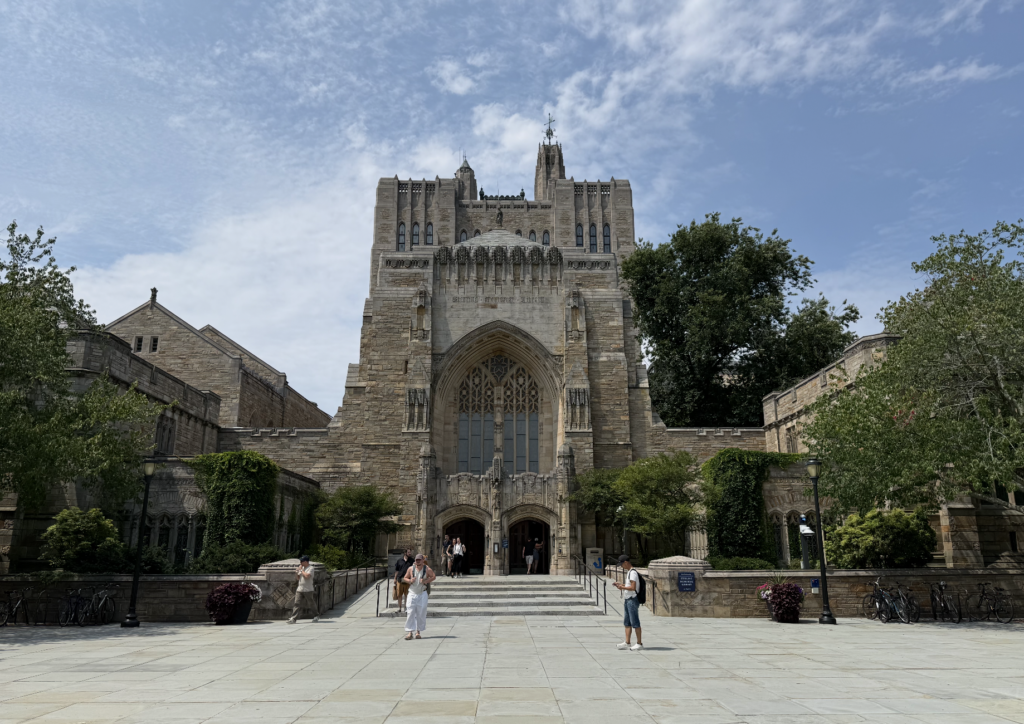
Enjoyed a walk along the beach of my first childhood memory, Meig’s Point at Hammonasset, a workout in my old gym (one of Yale’s many gothic stylized buildings nicknamed the House of Gain), and a little reading at Sterling Memorial Library – my favorite. I only missed out on Peabody Museum due to time constraints, and I couldn’t look my old apartment in the eye.

All quickly remedied as reliably as ever by getting out on the water via boat (pictured above; my head bobbing above the waves at sunset in the Atlantic).
Miasma; The History of Bad Airs
Earlier this week I had the pleasure of visiting a patient of mine who had been relegated to an extended stay in the hospital due to a recurrent airway-threatening bleed in the setting of ongoing treatment for back of the tongue cancer. I had treated him multiple times in the emergency department and this last time he earned an admission. Often, I check the charts of my more notable patients and if I see they are still in the hospital I’ll stop by to pay them a visit. Whether this is borne from a young doctor’s academic curiosity in seeing the outcomes play out, or envy of my in-patient medicine colleagues who follow their patients longitudinally, I find these visits probably do even more for my own spirit and wellness than the patient’s.
This otherwise healthy patient had been stuck in the hospital for a few weeks, and it made me reflect back on my medical school’s hospital which had an outdoor “healing garden” on the 6th floor for these scenarios. Why is it so instinctive to feel “fresh air” will do people good? Ignoring the obvious boon to the spirit, let’s take a walk back in time and examine “Miasmic theory”, or bad airs, a school of thought that dominated medicine across the world’s cultures at one point.
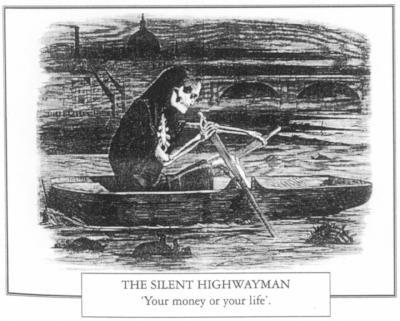
Miasma is a Greek term, it’s closest English approximation being pollution. Sometimes referred to as “night air”, little swatches of this theory pop up across the world from ancient Europe to China. Hippocrates pointed towards different diseases were more prominent with the changing airs of different seasons and expressed concern at the orientation of cities in relation to the winds and rising of the sun (On Airs, Waters, and Places, 400 BCE). Famous architect Vitruvius described mist (nebula in Latin!) from swamps and marshes created by the poisonous breath of their creature inhabitants wafting into towns at sunrise.
The theory had grown so outlandish by the 19th century that one Professor H Booth wrote in a letter to an architectural journal debating the source of cholera outbreaks, that miasma was even responsible for obesity.
“From inhaling the odour of beef the butcher’s wife obtains her obesity.” ~Professor H Booth, writing in the Builder, July 1844
A few breakthroughs helped bring an end to Miasma theory; one of the fathers of epidemiology John Snow famously tied those recurrent cholera outbreaks to specific water pumps in London (most iconically the Broad street pump) as opposed to the bad smell from the Terrible Stink of 1858. Louis Pasteur’s contributions to germ theory with puerperal disease and boric acid’s treatment of it. And finally, Robert Koch’s late 1800’s experiments that documented the activation of dormant anthrax bacteria spores dispelling the idea of spontaneous generation that was buttressing support for Miasma for decades after even Snow’s critics yielded their doubts (shoutout William Farr for being intellectually humble enough to admit he was wrong, even if it was after Snow’s death).
In my own previous home of Miami early settlement was driven by aggressive railroad expansion partly motivated by Flagler and his associates seeking “better airs” and economic support from Gilded age posh Northeast folk flocking towards warmer weather med spas of the 1800s and early 1900s. (Florida’s Grand Hotels of the Gilded Age; Ayers, 2005)
Regardless of how ludicrous blaming obesity on the smell of steak sounds, one must admit that much of this thought process followed logically from the obvious effect our environment has on our health. We’ve just refined our model of the causal link behind this relationship since. As statistician George Box once quipped;
“All models are wrong. It’s just that some are useful.”
Thankfully, this patient has since been freed from the miasma of the hospital, and hopefully he manages to avoid it for some time. Even if the fresh air may not be his cure, it’s nonetheless valuable of a gift.
What’s playing this week;
“I don’t mind if you can’t make it better, just remember how to try.”
Neu Blume, a his & her (Mo Neuharth and Colson Miller) Arizona/Detroit duo taking turns on the vocals. New on the indie folk alternative scene as of 2025. Been sorely missing some fresh artists in the scene after running out of new MJ Lenderman and Wednesday. Nice to have some West/Midwest influence as well. I like her tracks a lot better but the sound takes you to dusky wide open rolling landscapes regardless.
“Fear of nostalgia. Curses on Christmas Eve. Oil in water. Watch out!”
Minimalist & mysterious post-punk from New York trio Patio (Loren Diblasi, Lindsey Page-McCloy, Alice Suh) now spread out to New York, Berlin, Los Angeles. From their Spotify bio; “radiant collage of shifting identities, sensory illusions, and deconstructed disco grooves”. This has been my anthem lately when I’m traveling somewhere unfamiliar.
“Wounded warrior, forlorn soldier, it’s good to see you, fighting for what you believe”
Alright so this group has been a favorite of mine in 2026. The sound, the aesthetic, the lyrics, I’ve quickly become a huge fan. The trio of Sade Sanchez, Irita Pat, and Ellie English have created a soundscape of American traditional tattoos & gothic/cosmic horror & romance for the ears. Tacoma bassist Brian Cook perfectly described this album of theirs as “sonic terrain of existential and cosmic themes all while retaining the band’s signature sense of the forbidden, the forsaken, and the foreboding”. There are plenty of great tracks on DOGGOD but 777 has been on repeat this week.
“Drip, drip, drip, from a rib cage sky”
A little more in the psychadelic rock indie with a laid back listing quality. PACKS’ bio on Spotify is hippie gibberish. So, you know it’s pretty good. Feels almost as if Crumb & Patio came together.
This week’s reading;

I often enjoy Mike Weinstock’s segments when I listen to EMRAP so I was glad to borrow this one from a colleague of mine at their recommendation. Published back in 2011, it presents a series of ten cases from the late 90’s and early 00’s in a style akin to the flow of a Law and Order episode. Patient’s story, doctor’s charting, attorney’s desk, court case, and then finally the denouement.
The cover is studded with a who’s who of emergency medicine (all still big players 15 years later!) like Scott Weingart, Mel Herbert, Stuart Swadron, and is peppered with analysis from the ever quotable 90’s ACEP president Dr. Greg Henry. So quotable, that I just learned a quote I borrow often from an old teacher of mine was actually originally from Dr. Henry;
“the white blood cell count is the last refuge of the intellectually destitute”.
Greg Henry-ism
I approached this book worried it may inspire a bit of anxiety, perhaps revealing some perils of practicing emergency medicine I was still blissfully ignorant to. I expected horror stories of vindictive juries using doctors as a moral crumple zone of sorts in our crashing healthcare system for missing an atypical presentation of a one in a million diagnosis.
Instead it brought me a lot of clarity towards what behaviors matter to the judicial realm, public opinion, and how to bolster these to protect both the patient and yourself. Perhaps this is augmented by the fact I train at an institution well-known to err on the risk adverse side of practice, so I watch many of my attendings display or profess these habits, and they’ve been hammered into my own budding practice.
So what are the big take-aways in my opinion? I’ll break them down case-by-case; SPOILER ALERT!
Case 1: 39 Year-Old Woman with Multiple Complaints: Coughing during Cold and Flu Season
- Initially
As an aside here is a lovely farewell by Dr. Gillian Schmitz for Dr. Greg Henry when he passed away in 2024, filled with some of his best Henry-isms;
- “The biggest impediment to the correct diagnosis is the previous diagnosis.”
- “There are three great lies in life—the check is in the mail, size doesn’t matter, and all systems reviewed and otherwise negative.”
- “You can call me a bad husband. You can call be a bad father. But don’t you ever call me a bad doctor; now I’m offended.”
- “When a patient bounces back, they are giving you another chance to get the diagnosis right. If someone comes to the ED three times, then admit them. I don’t care if it’s the pizza guy. If he comes to the ED three times, I admit him.”
- “The mortality rate in this country has not changed—it is still one death per person.”
https://www.acepnow.com/article/tuesdays-with-dr-greg-henry-a-final-farewell-1946-2024/
Well that’s it for the week. Travel to my best friends semi-wedding, a little learning on the history of miasma theory inspired by a lovely patient of mine, new technical literature (though entertaining), some great new music finds on the indie front, and some great Greg Henry quotes to tuck away.
Next week I’ll be reading Stockdale’s “Thoughts of a Philosophical Fighter Pilot”, writing on Camus’ “The Plague” and hopefully can get some hiking in while the sunny weather persists. Until then.
“A lot of people in this country have pelvic inflammatory disease and most never die from it, unless they give it to my wife”
Greg Henry, MD in Case #8 of Bouncebacks! Medical & Legal